2026 Best Silicone Heat Transfer Suppliers for Global Buyers

Time:2026-10-12 Author:Aria
0%

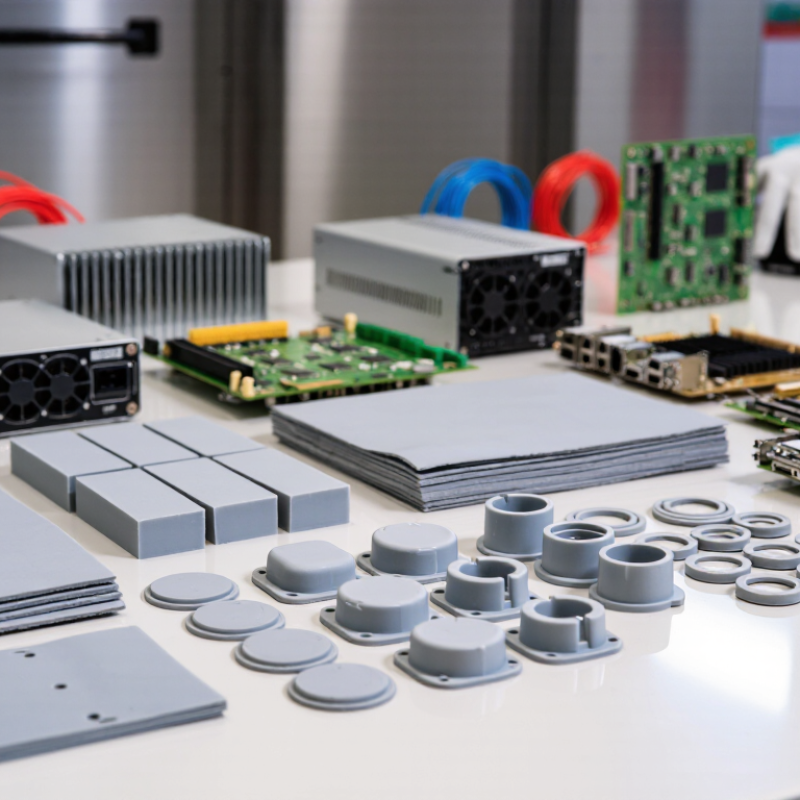
Global demand for Silicone Heat Transfer materials is rising with electric vehicles, LED lighting, data centers, and compact power electronics. MarketsandMarkets estimates that the thermal interface materials market could grow from approximately USD 3.7 billion in 2023 to USD 5.6 billion by 2028. Grand View Research also reports strong expansion across the broader silicone industry. The figures differ because each report uses different product definitions. That matters to global buyers.

Adrian Bejan, a leading heat-transfer professor, wrote, “Everything that moves, moves because it is driven by a difference.” His principle explains why thermal pads, sheets, and molded silicone parts must move heat away from sensitive components. A supplier’s catalog is not enough. Buyers should examine thermal conductivity, compression set, dielectric strength, operating temperature, and ASTM D5470 test data. Request batch records, RoHS and REACH declarations, ISO 9001 certificates, and samples with the actual release liner and adhesive system. Small details matter. A one-millimeter pad may compress unevenly across a power module. That gap can create a visible hot spot.

This 2026 supplier guide evaluates manufacturers by verified performance, production experience, customization capability, and export reliability. It considers prototype support, die-cut accuracy, cleanroom controls, packaging, lead times, and technical communication. Forecasts are useful, but they are not purchasing decisions. No ranking is perfect. Product consistency, not marketing language, should decide the final shortlist.
2026 Best Silicone Heat Transfer Suppliers for Global Buyers

What Silicone Heat Transfer Is and How It Works

What Silicone Heat Transfer Is and How It Works

Silicone heat transfer is a decoration method for textiles, footwear, and flexible products. It uses silicone ink, a carrier film, and a heat-activated adhesive layer. During production, silicone ink is printed onto the film in controlled layers. Each layer receives partial curing before the next one is added. The final silicone surface is then fully cured for elasticity, thickness, and chemical stability.

The application stage is simple, but not careless. A heat press transfers the design onto fabric through controlled temperature, pressure, and dwell time. The adhesive softens, bonds with the fibers, and cools into a durable connection. Polyester, nylon, and blended fabrics can react differently. Always test the actual fabric.

According to Grand View Research, the global silicone market reached approximately USD 18.5 billion in 2023. Its analysis projects about 6.2% annual growth through 2030. Fortune Business Insights reports a similar long-term expansion pattern, reflecting wider demand for flexible, heat-resistant materials.

In production trials, operators should check edge lifting, surface cracking, wash resistance, and color migration. A smooth sample can still fail after repeated washing. That assumption is often wrong. Excessive heat may flatten fine textures or damage sensitive fabric. Lower pressure may leave weak bonding. Supplier evaluation should include curing records, test methods, batch consistency, and documented compliance results. Curing remains the difficult part.

2026 Best Silicone Heat Transfer Suppliers for Global Buyers

What Silicone Heat Transfer Is and How It Works

Silicone heat-transfer graphics use a silicone-based ink or film that is transferred to fabric with controlled heat, pressure, and dwell time. The typical application temperature varies by textile type: heat-sensitive nylon generally requires a lower setting, while cotton and polyester blends commonly use higher temperatures. Actual settings depend on the transfer construction, fabric finish, and curing system.

Key Criteria for Evaluating Global Silicone Heat Transfer Suppliers

Choosing a silicone heat transfer supplier requires more than comparing price lists. Start with material performance. Ask for peel-strength data, wash-cycle results, curing temperatures, and storage conditions. A reliable supplier should explain how silicone ink bonds with cotton, polyester, blends, and coated fabrics. Request production samples, not only laboratory swatches. Small details matter.

Traceability is equally important. Each batch should have a production date, material code, inspection record, and clear technical data sheet. Experienced suppliers can describe their mixing, printing, curing, and quality-control procedures without vague promises. Check whether they measure transfer thickness, edge definition, color consistency, and adhesion under repeated washing. Their answers should remain consistent across sales, technical, and factory teams.

Capacity and communication reveal practical reliability. Confirm sample lead times, minimum order quantities, packaging methods, and procedures for handling defects. During my supplier evaluations, a fast reply sometimes hid weak documentation. That was a warning. Do not ignore it. A spreadsheet can also miss real production risks, such as uneven curing near roll edges or delayed updates during peak seasons. Ask for references from comparable applications and conduct a controlled trial before approving bulk production. No supplier performs perfectly, so record deviations and discuss corrective actions openly.

2026 Best Silicone Heat Transfer Suppliers for Global Buyers - Key Criteria for Evaluating Global Silicone Heat Transfer Suppliers

Evaluation Dimension Weight Recommended Buyer Benchmark Evidence to Request Key Questions for Supplier Evaluation
Silicone Material Quality 15% Consistent silicone formulation, controlled viscosity, stable color, and suitable elasticity for the target textile. Technical data sheet, safety data sheet, color standards, batch records, and retained sample information. How is silicone viscosity controlled between batches? What fabric types and stretch levels are supported?
Transfer Adhesion 15% The transfer should bond securely to the specified fabric after correct application, without edge lifting, cracking, or excessive residue. Peel-test results, application instructions, fabric compatibility data, and pre-production samples. What peel-strength method is used? Which temperature, pressure, and dwell-time settings are required?
Wash and Abrasion Durability 15% Performance should be validated under the buyer's actual wash method, detergent, temperature, drying process, and number of cycles. Independent or internal wash-test reports, cycle conditions, photographs, and failure criteria. How many cycles were tested? Were tests conducted on the exact fabric composition and transfer construction?
Application Process Window 10% Clear operating parameters for temperature, pressure, dwell time, peeling method, and post-press requirements. Application guide, press-setting matrix, troubleshooting guide, and validation samples. How tolerant is the product to press-temperature or pressure variation? Is a second pressing step needed?
Color Accuracy and Reproducibility 10% Stable color appearance across production lots, with agreed tolerances and defined approval samples. Approved lab dips, color measurement records, lot-to-lot comparison samples, and correction procedures. What color tolerance is agreed for repeat orders? How are fluorescent, metallic, or high-opacity colors controlled?
Regulatory and Chemical Compliance 10% Documentation should match the destination market and the finished transfer, adhesive, film, inks, and packaging components. Current third-party test reports, restricted-substance declarations, safety data sheets, and material declarations. Which regulations and restricted-substance lists are covered? Are reports product-specific and recently updated?
Quality Management System 8% Documented incoming-material inspection, in-process controls, final inspection, traceability, and corrective-action procedures. Quality manual, inspection plan, sample inspection records, nonconformity reports, and applicable certification. How are defects classified and reported? Can every shipment be traced to a production batch?
Production Capacity and Lead Time 7% Capacity should support forecasted demand, seasonal peaks, sampling, and urgent replacement orders without compromising quality. Capacity statement, standard and expedited lead times, production schedule, and business-continuity plan. What is the normal lead time for sampling and repeat production? How are delays communicated?
Minimum Order Quantity and Sampling 5% Flexible sample quantities, transparent setup charges, and commercially practical minimum order quantities for the buyer's launch stage. Sample policy, quotation, setup-cost schedule, artwork requirements, and sample approval form. Can the supplier produce mixed sizes or colors in one order? Are sample charges credited against production orders?
Packaging and Shipping Readiness 3% Transfers should be protected from moisture, heat, dust, bending, and compression during international transport. Packaging specification, carton dimensions, labeling format, storage instructions, and shipping test records where available. What storage temperature and humidity limits apply? How are cartons protected during long-distance transportation?
Technical Support and After-Sales Service 2% Responsive technical support for artwork preparation, press calibration, fabric trials, defect analysis, and corrective action. Support contact details, response-time commitment, troubleshooting materials, and escalation procedure. Who handles technical claims? What information and samples are required for a failure investigation?
Recommended Evaluation Method 100% Score each supplier from 1 to 5 for every dimension, multiply the score by the assigned weight, and validate the highest-scoring candidates through a production trial using the buyer's actual fabric, artwork, press, wash process, and delivery requirements.

Note: Performance targets and compliance requirements should be confirmed for the specific silicone transfer construction, textile composition, application equipment, and destination market.

Top Supplier Categories and Their Manufacturing Capabilities

For global buyers, silicone heat transfer suppliers usually fall into four categories: silicone compound manufacturers, transfer-film converters, contract decorators, and regional stockists. Each serves a different purchasing need. Compound manufacturers offer stronger control over silicone hardness, pigment stability, and curing behavior. Converters focus on printable films, screen systems, and roll-to-roll production. Contract decorators apply transfers directly to garments, footwear, or promotional products. Stockists provide speed, but often with fewer customization options.

Manufacturing capability separates reliable suppliers from attractive catalogs. A capable converter should show controlled mixing, mesh-screen calibration, tunnel curing, and peel-strength testing. Ask for sample records, not only product photographs. Grand View Research valued the global silicone market at approximately USD 18 billion in 2023 and expects continued growth through 2030. This wider market includes medical, construction, and industrial uses, so buyers should not treat general silicone data as heat-transfer evidence. The distinction matters.

MarketsandMarkets has also reported steady expansion in the textile printing industry, supported by digital workflows and customized apparel demand. In practice, buyers should compare minimum order quantities, color reproducibility, wash testing, and storage conditions. A supplier with in-house formulation may solve adhesion problems faster. However, vertical integration does not guarantee better transfers. I have seen technically polished samples fail after repeated washing. Requesting independent test results is wiser than trusting confident claims. Suppliers should also explain substrate limits, curing temperatures, and rejected-batch procedures in clear language. Small omissions can become expensive at scale.

How to Compare Quality, Compliance, Pricing, and Delivery

2026 Best Silicone Heat Transfer Suppliers for Global Buyers

Comparing silicone heat transfer suppliers requires more than checking the lowest quotation. In production, surface feel, edge definition, stretch recovery, and wash durability affect the final garment. Request recent samples made with the same fabric type. Test them after repeated washing, stretching, and heat exposure. A bright sample can still fail after use.

Ask for documented material specifications, batch controls, and applicable compliance reports. Reliable suppliers should explain silicone composition, curing conditions, restricted-substance testing, and labeling requirements for your destination markets. Check whether reports match the actual production material, not an older sample. I have seen buyers trust certificates without verifying dates or product codes. That mistake becomes expensive.

Tips: Compare total landed cost, including tooling, sampling, packaging, freight, duties, and possible rework. Ask for a written lead-time schedule with approval points. Confirm minimum order quantities and replacement terms before payment. A supplier offering fast delivery may lack stable capacity. A cheaper supplier may require more inspection. Leave room for delays; production plans are rarely perfect. Request a small pilot order before scaling, and record peel strength, color tolerance, and delivery performance. Keep those results for future supplier reviews.

Best Supplier Selection Strategies for Different Buyer Needs

2026 Best Silicone Heat Transfer Suppliers for Global Buyers

Supplier selection should match the buyer’s real production problem. A fashion label may need soft hand feel and precise color matching. A workwear producer may prioritize wash durability and chemical resistance. According to Grand View Research, the global silicone market is projected to grow at about 6% annually through 2030. That growth increases supplier choices, but not necessarily supplier quality. Ask for production samples, technical data sheets, and batch records. Test peel strength, stretch recovery, surface migration, and performance after at least 25 washing cycles. For large orders, verify curing consistency across multiple lots. One attractive sample proves little.

Cost-sensitive buyers should compare total landed cost, not unit price. Include tooling, setup, freight, rejects, and replacement time. Buyers with short launch windows need confirmed capacity and documented lead-time performance. Buyers serving regulated markets should request material declarations, restricted-substance screening, and factory quality records. ISO 9001 certification can support process control, but it does not guarantee transfer performance. Reports from MarketsandMarkets show strong growth in digital textile printing, with double-digit annual expansion forecast in recent years. Demand is rising. Pressure on quality may rise too.

Tips: Build a scorecard before requesting quotations. Weight durability, delivery, compliance, and service differently for each project. Request three samples from separate batches. I have seen buyers overvalue glossy finishes and underestimate adhesion. That mistake is expensive. Recheck assumptions before signing.

FAQS

What is silicone heat transfer?

It is a textile decoration method using silicone ink, carrier film, and heat-activated adhesive. The result feels flexible and raised.

How does the transfer process work?

Silicone ink is printed onto a film in controlled layers. Each layer receives partial curing before the next layer is added.

Which fabrics can accept silicone heat transfers?

Polyester, nylon, and blended fabrics are commonly used. However, each fabric may react differently during pressing and washing.

What should buyers test before approving production?

Check edge lifting, surface cracking, peel strength, color migration, and stretch recovery. Wash samples for at least 25 cycles.

What supplier capabilities matter most?

Look for controlled mixing, screen calibration, tunnel curing, and documented peel-strength testing.

Which supplier type fits different purchasing needs?

Compound manufacturers offer formulation control. Film converters focus on printable films and transfer production.

How should buyers compare supplier prices?

Compare total landed cost, not only the unit price. Include tooling, setup, freight, rejected goods, and replacement time.

What documents should suppliers provide?

Request technical data sheets, curing records, batch consistency reports, material declarations, and restricted-substance screening results.

How can buyers reduce production risk?

Create a scorecard covering durability, delivery, compliance, service, and customization. Request three samples from separate batches.

Conclusion

Silicone Heat Transfer is a specialized decoration and application method that uses silicone-based materials to create durable, flexible, and visually consistent designs on textiles and other compatible surfaces. This article explains how the process works, including material selection, heat application, bonding, curing, and performance factors such as stretch resistance, wash durability, color stability, and surface compatibility.

For global buyers, choosing the right supplier requires evaluating manufacturing capabilities, product customization, quality control, regulatory compliance, pricing transparency, minimum order quantities, lead times, packaging, and logistics support. The article compares different supplier categories, from standardized producers to specialized manufacturers offering custom colors, textures, finishes, and technical solutions. It also presents practical selection strategies for apparel brands, distributors, promotional product companies, and industrial users, helping buyers match supplier strengths with project requirements while reducing quality, delivery, and communication risks.


Aria

Aria

Aria is a dedicated marketing professional with a deep passion for innovative strategies and a keen understanding of our company's product offerings. With a wealth of experience in the industry, Aria excels at crafting engaging content that highlights the unique features and benefits of our......